Preparing For Emergencies
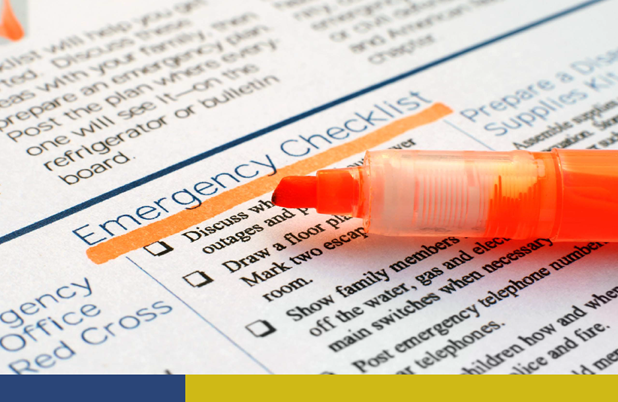
The Federal Emergency Management Agency (FEMA) produces a helpful publication called Are You Ready? An In-depth Guide to Citizen Preparedness.
Download a copy and continue to educate yourself by keeping up with current events
Preparation for an emergency before disaster strikes involves learning as much as you can and making plans to act. Reading this booklet and following its tips and recommendations will give you a good start.
General Emergency Preparedness
Copy, clip and use the clip-out cards included in Appendix A of this guide. Write your family contact information in the blanks on the back of each card. Keep one copy of the card in your purse or wallet, and distribute other copies to your family members. Keep another copy by the phone.
Include emergency contact information and plans for children and seniors who may be home alone during emergency situations. Identify young children, seniors and neighbors with disabilities who may need help, and develop a plan to assist them in an emergency.
You may be asked to shelter in place for one or more days. Supplies sufficient at least 3 to 4 days may be necessary to withstand a public health emergency. Prepare a “home disaster supplies kit" that you can organize quickly. The side column lists items that a kit typically contains. Store items in clear plastic tubs or other readily identifiable containers. Check batteries, replace stored water and rotate food supplies every six months.
Determine items that you would need if you were asked or ordered to evacuate your home. Store these items in easy-to-carry containers such as backpacks or duffle bags. A “go kit" may contain extra clothing, cash, credit cards, prescriptions, eyeglasses, important documents, and personal items. You do not need to include water or food-related items (unless you have special dietary needs)
Emergency Evacuation Plans
Know what to do if you are instructed to evacuate your home or community. Every child and other member of your family should know at least two ways (if possible) to escape your home in case of fire or other emergency. If you live in an apartment, know the building's evacuation plan. Agree on a place nearby to meet once everyone gets out.
Remember that with the exception of guide dogs, shelters usually do not allow pets (see “If you have pets" on page 10).
(See “How to shut off gas supply" and “How to shut off electricity" on page 20 in the Emergency Alert System section). You will find the main water shut-off valve outdoors where the main pipe enters your dwelling.
Home Disaster Supplies Kit
- 3 to 5 day supply of water at one gallon per person per day
- Food that will not spoil and does not require cooking
- A non-electric can opener
- An extra pair of eyeglasses
- An extra set of keys
- Candles and lighters
- First-aid kit and needed medicines (see “Home first-aid kit” on page 28 in the “First Aid and CPR” section)
- Battery operated radio, flashlight, and extra batteries
- Toilet tissue, toothbrushes, toothpaste, and plastic trash bags
- Change of clothing, rain gear and sturdy shoes
- Blankets or sleeping bag
- Special items for infants, elderly, and disabled family members
- A deck of cards and simple games for children (see “Help your kids cope” on page 9)
- A list of family physicians and emergency contacts
- A separate “go kit” in case you have to leave